


- What's Kuradashi Tea
- Four Seasons of Green Tea
- Green Tea for Health
- How to Enjoy Green Tea
- Iced Tea Recipes
- History of Green Tea
- Benefits of Matcha
- Japanese Tea Ceremony
- Organic Tea Farm
- Celebration Gifts in Japan
- Choosing a Japanese Tea
- Choosing Tea Ware
- Traveling around Uji
- Japanese Wood & Lacquer Traditions
- RAKU YAKI - Avantgarde to Tradition


- Kuradashi Matcha (Limited)Enriched by traditional way. Mellow and enhanced taste

- Kuradashi Tea (Enriched in the granary)Now Available!

- Kuradashi Gyokuro PinnacleShaded from Sunlight by the most traditional way "Honzu"

- RAKU YAKI - Matcha Bowl (New & Limited)Avant-garde and novel limited bowls

- What is Kuradashi TeaDo you know Kuradashi enriched Tea?

- Matcha Bowls / Accessories (New & Limited)Modern sophisticated / traditional handcrafted

- Yunomi and Accessories (New & Limited)Modern sophisticated / traditional handcrafted

- [Limited] Snacks / Candy (Autumn)Premium, Traditional & Modern

Teapots & Cups / Supplies
All of our Teapots / Cups, and accessories for Gyokuro, Sencha, and other kinds of Japanese tea are carefully selected for their function, value, and style. We have a wide variety of items in porcelain, ceramic, and glass: handmade teapots, tea cups, accessories for preserving tea leaves, and much more.

Best Selling Items- Monthly
-
1
 KIJICAN (airtight container: pair: capacity 150g)
US$22.00
-
2
 Kyusu (Teapot: 360ml)
US$36.00
-
3
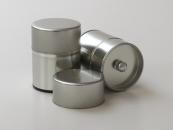 KIJICAN (airtight container: pair: capacity 40g)
US$19.00
-
4
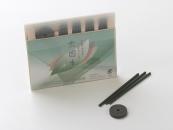 [Recommended] SOUEN-KOH (Japanese Tea Incense: 12 sticks)
US$19.50
-
5
 Essential Tea Set
US$56.50
-
6
 SENDAN Large Kyusu (Teapot: 900ml)
US$70.00
-
7
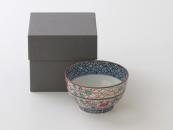 [Limited] HIWA KAUN Yunomi (handcrafted: 130ml)
US$228.00
-
8
 [Recommended] Earthenware Kyusu & TETSUSAN Yunomi set
US$80.00
-
9
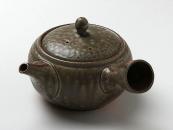 Earthenware Kyusu (Teapot: 360ml)
US$44.00
-
10
 MATSUBA Yunomi (Teacup:pair:100ml each)
US$27.00
-
11
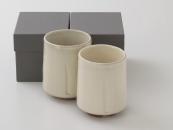 [Limited] HON KOBIKI - pair (handcrafted Teacup)
US$84.00
-
12
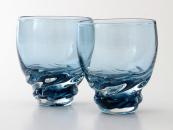 [Limited] NOTO Blue Tea Glass - NAGARE - pair (handcrafted glass)
US$131.00
-
13
 [New] KABASAIKU - MUJIKAWA (handcrafted Cap.150g)
US$174.00
-
14
 CHOH to SAKURA Kyusu (handcrafted: 300ml)
US$172.00
-
15
 GYOKKOH Yuzamashi (handcrafted: 300ml)
US$31.00


-
 21051 US$78.00 Teapot CLEAR - Filter Top & MANTEN Yunomi set
This Teapot and Yunomi set is specifically designed to be convenient and easy to use. This is not only a convenient and simple design but also sophisticated and stylish. You are surely able to enjoy both iced tea, hot tea and the beautiful color of tea in your green moment with this functional and fashionable set...

-
 Limited 21102 US$348.00 KOKUSHU Hohin Set (handcrafted Tea Set)
The Hohin (meaning Treasure Jar or Magical Jar) is a specialized Kyusu, unique in its handle-less design, crafted exclusively for brewing the most exquisite grades of Uji tea. It is believed that the Hohin bestows an even more mellow character upon high-grade teas...
-
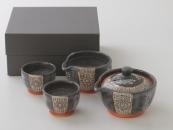 Limited 21302 US$179.00 KURO SHINO INKA Hohin Set (handcrafted Tea Set)
This KURO SHINO Hohin Set exudes a quiet elegance and refined sophistication. Finished with a deep gray glaze known as KURO SHINO, it conveys a sense of maturity and timeless beauty. Bold white vertical panels decorate the exterior, while delicate gold lines accentuate their borders, adding a graceful touch...
-
 New 21401 US$80.00 CHATATSU Hohin set - KAMENOZOKI (handcrafted)
CHATATSU is another name for Hohin. KAMENOZOKI refers to a traditional, very pale and clear sky-blue color achieved through indigo dyeing. The name originates from the practice of dipping fabric into an indigo vat (AI-GAME) or from the delicate blue seen when looking into the vat shortly after the dyeing process begins...
-
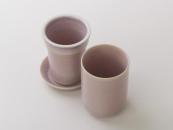 New 26310 US$48.00 TSUTSUCHA Strainer Teacup - KINYO (Teacup: 250ml)
This set makes it simple to enjoy tea without a traditional teapot. The cup, tea strainer, and saucer all fit together compactly, making it perfect for a single serving or limited space. To use, place the strainer inside the cup and add the tea leaves. Pour in hot water and cover with the saucer. After your preferred brewing time, remove the saucer, place the strainer on top of it, and enjoy your tea....
-
 New 26403 US$56.00 AI HANA MON Strainer Mug (Mug: 250ml)
If you have this Strainer Mug, you can enjoy Japanese green tea anywhere without teapots and tea cups. It has a lid, which is convenient to steam the tea leaves during brewing, keep the tea warm, and use as a saucer to place the strainer upon while not in use...


-
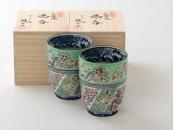 Limited 22105 US$469.00 SHOSOIN - Green - pair (handcrafted Teacup)
SHOSOIN is a repository of treasures located next to TODAIJI Temple in Nara. It has a large collection of Japanese artifacts dating from the 7th to 10th centuries, some of which show cultural influences from the Middle East, Greece, and Rome...
-
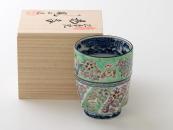 Limited 22106 US$269.00 SHOSOIN - Green (handcrafted Teacup: 200ml)
SHOSOIN is a repository of treasures located next to TODAIJI Temple in Nara. It has a large collection of Japanese artifacts dating from the 7th to 10th centuries, some of which show cultural influences from the Middle East, Greece, and Rome...
-
 RINPA 22592 US$173.00 KAKITSUBATA ZU (handcrafted teacup)
KAKITSUBATA means iris in Japanese. The contrast between the green color of the iris leaves and the navy and light blue colors of the iris petals creates a fresh atmosphere. The golden glaze coats outside the teacup, and it is close to the original color of the BYOBU folding screen...
-
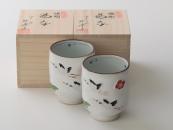
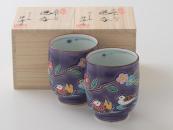 Limited 23405 US$154.00 KOHCHI OSHIDORI - pair (handcrafted Teacup)
This elegant teacup depicts a pair of mandarin ducks gliding peacefully across the water beneath branches adorned with cherry blossoms and fresh young leaves. In Japan, the expression OSHIDORI FUFU ("mandarin duck couple") is used to describe a happily married couple...
-
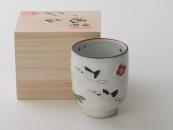
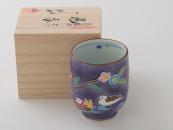 Limited 23406 US$88.00 KOHCHI OSHIDORI (handcrafted Teacup: 180ml)
This elegant teacup depicts a pair of mandarin ducks gliding peacefully across the water beneath branches adorned with cherry blossoms and fresh young leaves. In Japan, the expression OSHIDORI FUFU ("mandarin duck couple") is used to describe a happily married couple...
-
Limited 23704 US$131.00 NOTO Blue Tea Glass - NAGARE - pair (handcrafted glass)
The NOTO Blue - NAGARE tea glass combines crystal-clear glass with a deep ocean-blue hue, creating a refreshing yet sophisticated design unlike any other. Each flowing contour is carefully shaped by hand, allowing the glass to capture light and cast beautiful shadows. Designed with the concept that "even its shadow should be beautiful," this handcrafted piece reveals a different expression depending on the light and the angle from which it is viewed...
-
 Limited 23705 US$75.00 NOTO Blue Tea Glass - NAGARE (handcrafted glass 110ml)
The NOTO Blue - NAGARE tea glass combines crystal-clear glass with a deep ocean-blue hue, creating a refreshing yet sophisticated design unlike any other. Each flowing contour is carefully shaped by hand, allowing the glass to capture light and cast beautiful shadows. Designed with the concept that "even its shadow should be beautiful," this handcrafted piece reveals a different expression depending on the light and the angle from which it is viewed...
-
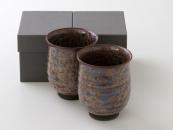 Limited 23719 US$131.00 HANA KESSHO Yunomi HAICHA - pair (handcrafted)
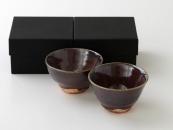
The traditional Japanese color HAICHA has been admired since the Edo period. Its muted brown, reminiscent of tea softened with a hint of ash, embodies a quiet elegance. Subtle yet dignified, understated yet sophisticated, HAICHA reflects the refined beauty of Japanese aesthetics...
-
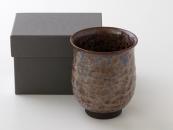 Limited 23720 US$75.00 HANA KESSHO Yunomi HAICHA (handcrafted: 210ml)
The traditional Japanese color HAICHA has been admired since the Edo period. Its muted brown, reminiscent of tea softened with a hint of ash, embodies a quiet elegance. Subtle yet dignified, understated yet sophisticated, HAICHA reflects the refined beauty of Japanese aesthetics...
-
 Limited 23829 US$115.00 TSUKI AKARI Amber Tea Glass - pair (handcrafted glass)
A soft amber-colored glass teacup reminiscent of gentle moonlight, this TSUKI AKARI tea glass is crafted using a special technique that creates a unique pattern of colors. The pattern is created when the hot glass is rapidly cooled during the manufacturing process. This heat-resistant tea glass is thin and lightweight with an incomparable elegance and gracefulness...
-
 Limited 23830 US$66.00 TSUKI AKARI Amber Tea Glass (handcrafted glass 100ml)
A soft amber-colored glass teacup reminiscent of gentle moonlight, this TSUKI AKARI tea glass is crafted using a special technique that creates a unique pattern of colors. The pattern is created when the hot glass is rapidly cooled during the manufacturing process. This heat-resistant tea glass is thin and lightweight with an incomparable elegance and gracefulness...
-
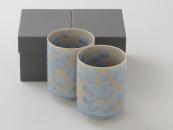 Limited 24009 US$115.00 HANA KESSHO Yunomi GINFUJI -pair (handcrafted)
This item is finished by the technique called crystal glaze. HANA of this name means flower and KESSHO means crystal in Japanese. GIN of this name means silver and FUJI means wisteria in Japanese. It expresses noble elegant purple color glaze which was newly developed at Tohan Kiln...
-
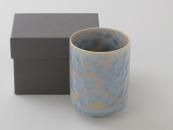 Limited 24010 US$66.00 HANA KESSHO Yunomi GINFUJI (handcrafted: 200ml)
This item is finished by the technique called crystal glaze. HANA of this name means flower and KESSHO means crystal in Japanese. GIN of this name means silver and FUJI means wisteria in Japanese. It expresses noble elegant purple color glaze which was newly developed at Tohan Kiln...
-
 New 24201 US$98.00 HOEN BAIKA Yunomi - pair (by Eizan Okuda)
This Yunomi, with its square body and rounded mouth, is a special masterpiece created by the artisan Mr. Eizan Okuda. The unique shape and the gradation of patterns created by the traditional firing method of the ANAGAMA kiln make this Yunomi extremely distinguished.
-
 New 24202 US$56.00 HOEN BAIKA Yunomi (by Eizan Okuda)
This Yunomi, with its square body and rounded mouth, is a special masterpiece created by the artisan Mr. Eizan Okuda. The unique shape and the gradation of patterns created by the traditional firing method of the ANAGAMA kiln make this Yunomi extremely distinguished.
-
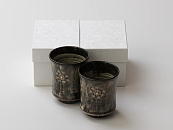 Limited 24622 US$84.00 KUSHIME INKA Yunomi - KURO - pair (handcrafted)
KURO means black. Even though the name refers to the black color, the actual color is dark brown. It is named as such to represent contrast. KUSHIME means comb line in Japanese. Fine and uneven comb lines are marked vertically and from the rim to the bottom...
-
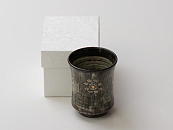 Limited 24623 US$48.00 KUSHIME INKA Yunomi - KURO (handcrafted: 150ml)
KURO means black. Even though the name refers to the black color, the actual color is dark brown. It is named as such to represent contrast. KUSHIME means comb line in Japanese. Fine and uneven comb lines are marked vertically and from the rim to the bottom...
-
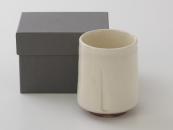
 Limited 24631 US$84.00 SHINO INKA - pair (handcrafted Teacup)
SHINO of this name means the place where this teacup was originated, and INKA means stamped flower in Japanese. Simple yet impressive stamped flowers are inlayed uniformly around the outside of the Yunomi. Flower centers colored white and grey are brilliant in the white and thick SHINO glaze...
-
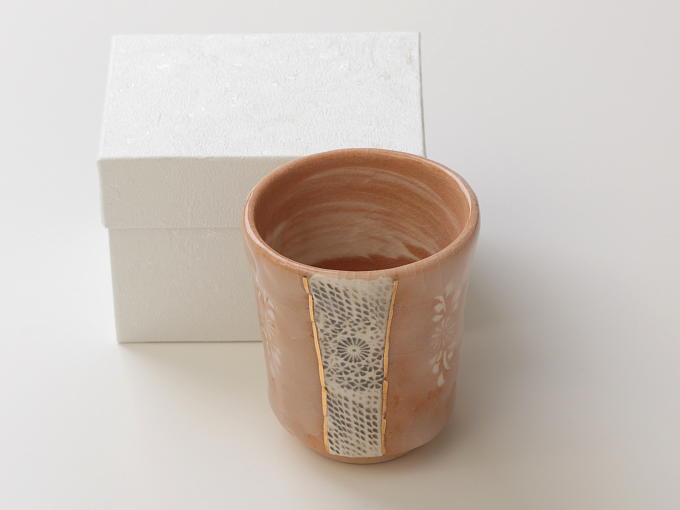 Limited 24632 US$48.00 SHINO INKA (handcrafted Teacup: 180ml)
SHINO of this name means the place where this teacup was originated, and INKA means stamped flower in Japanese. Simple yet impressive stamped flowers are inlayed uniformly around the outside of the Yunomi. Flower centers colored white and grey are brilliant in the white and thick SHINO glaze...
-
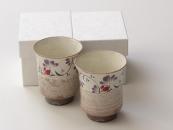 Limited 24637 US$84.00 KOBIKI KARAKUSA - pair (handcrafted Teacup)
KOBIKI of this name means glazing white color on the pottery, and KARAKUSA means arabesque pattern in Japanese. This Yunomi teacup is coated with glaze made from white clay, and KARAKUSA arabesque pattern is colorfully and rhythmically designed on the upper side...
-
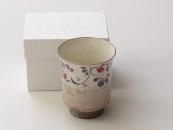 Limited 24638 US$48.00 KOBIKI KARAKUSA (handcrafted Teacup: 150ml)
KOBIKI of this name means glazing white color on the pottery, and KARAKUSA means arabesque pattern in Japanese. This Yunomi teacup is coated with glaze made from white clay, and KARAKUSA arabesque pattern is colorfully and rhythmically designed on the upper side...
-
 26205 US$75.00 TETSUSAN SENBORI Yunomi - pair (handcrafted Teacup)
TETSU means iron, and SAN means scatter. As the name expresses, you can see black dots formed when the iron content in the clay appears on the surface of the cup. This tea cup is made from clay that contains iron and is the potteries' original blend mainly collected in Shigaraki...
-
New 26310 US$48.00 TSUTSUCHA Strainer Teacup - KINYO (Teacup: 250ml)
This set makes it simple to enjoy tea without a traditional teapot. The cup, tea strainer, and saucer all fit together compactly, making it perfect for a single serving or limited space. To use, place the strainer inside the cup and add the tea leaves. Pour in hot water and cover with the saucer. After your preferred brewing time, remove the saucer, place the strainer on top of it, and enjoy your tea....
-
New 26403 US$56.00 AI HANA MON Strainer Mug (Mug: 250ml)
If you have this Strainer Mug, you can enjoy Japanese green tea anywhere without teapots and tea cups. It has a lid, which is convenient to steam the tea leaves during brewing, keep the tea warm, and use as a saucer to place the strainer upon while not in use...
-
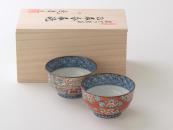 Limited 27037 US$397.00 AKADAMI BOTAN / HIWA KAUN Yunomi - pair (handcrafted)
This pair of Yunomi includes AKADAMI BOTAN KARAKUSA Yunomi and HIWA KAUN Yunomi. Each porcelain Yunomi features remarkable yet subtle carving and delicate vivid painting, which are both sustained by quite high level traditional techniques and intense effort over time...
-
Limited 27038 US$228.00 HIWA KAUN Yunomi (handcrafted: 130ml)
This porcelain Yunomi features remarkable yet subtle carving and delicate vivid painting, which is sustained by quite high level traditional techniques and intense effort over time. HIWA means faint green color named for a bird called HIWA. KAUN means flower and cloud in Japanese...
-
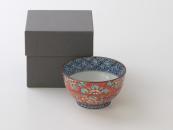 Limited 27039 US$228.00 AKADAMI BOTAN KARAKUSA Yunomi (handcrafted: 130ml)
This porcelain Yunomi features remarkable yet subtle carving and delicate vivid painting, which is sustained by quite high level traditional techniques and intense effort over time. AKADAMI of this name means filling blank space with red color, BOTAN means peony in Japanese...
-
 Limited 27455 US$98.00 BIZEN TAMA Yunomi - pair (handcrafted Teacup)
BIZEN TAMA Yunomi is particularly noteworthy in our lineup of tea ware because it allows you to feel the materiality of the clay and enjoy the scarlet color of the firing flame. You will be able to enjoy your tea time more comfortably by holding a teacup in your hand that allows you to strongly experience the texture of the earthenware clay, both visually and tactilely...
-
 New 27552 US$79.00 HYOUKA SENNOUGE Yunomi - pair (handcrafted Teacup)
The glossy white porcelain of this cup is adorned with a carved motif as radiant as ice: the SENNOUGE flower. With its slender, finely detailed petals expressed in thin porcelain, the design evokes the delicate beauty of tea flowers (CHAKA). The SENNOUGE, belonging to the Pink family, blooms from early summer to autumn.
-
 Limited 27701 US$68.00 ORIBE Yunomi - pair (handcrafted Teacup)
ORIBE green glaze creates a noble atmosphere, and the contrast between its glaze and the color of earthenware is well matched. Hexagon or vertical stripe patterns decorated by iron glaze add vivid accent to each teacup. The rugged yet unique shape is well harmonized to the color and design...
-
 Top Choice! 27712 US$61.00 SOME KAMON Yunomi (handcrafted Teacup: pair)
Just at first glance, you may possibly feel that this Yunomi is plain and simple. However, the artist has achieved sophistication without ostentatious garnish. In addition, the thin and lightweight porcelain enhances the good flavor of tea...
-
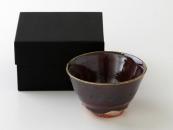
 Recommended 27751 US$61.00 SAKURA Yunomi - pair (handcrafted Teacup)
SAKURA teacups have a sophisticated and modern design. The inside of the teacup is shaped like cherry blossom petals. At first glance, the teacup appears to be a simple white teacup, but when tea is poured into it, the shape of a cherry blossom emerges.








-
28141 US$172.00 CHOH to SAKURA Kyusu (handcrafted: 300ml)
This Kyusu gives the impression of a spring breeze with butterflies and cherry blossom petals. You will certainly feel that the room and atmosphere around this Kyusu are calm, relaxed, and leisurely. To consider the effort and technique on this Kyusu, this price is absolutely reasonable...
-
 28151 US$116.00 TENMOKU Kyusu (handcrafted: 300ml)
TENMOKU is an iron glaze traditionally known for its impenetrable and elusive nature. It was said that if an artisan tried to pursue TENMOKU glaze, they would become insolvent. Unique pattern on the surface of the teapot is similar to the color inside a sea shell and seven bright color changes occur according the position from which it is viewed...
-
 28161 US$98.00 KITTACHI MOGAKE Kyusu (handcrafted: 300ml)
The technique called MOGAKE is used for this Kyusu. MO means seaweed and GAKE means wrapping in Japanese. As the name suggests, this Kyusu is fired in the kiln while wrapped with seaweed. Salt contained in the seaweed creates the unique color pattern due to the chemical reaction...
-
 28171 US$98.00 SHIROTSUCHI Kyusu - FUJIGATA (handcrafted: 300ml)
SHIROTSUCHI refers to the white color of this Kyusu. Usually, Kyusu are SHUDEI red, brown or gray, but this Kyusu has a mild white color. This color was developed to show the beautiful green color of tea. Its whiteness, developed after about two years of trial and error, is unmatched by any other Kyusu. The mountain shape of the Kyusu and its characteristic white color harmonize beautifully to create a sense of gentleness and charm...
-
 28172 US$98.00 KUROTSUCHI Kyusu - TSUTSUGATA (handcrafted: 300ml)
KUROTSUCHI refers to the black color of this teapot. Normally, most teapots are SHUDEI red or brown, but this teapot has a simple matte black color (grayish black). This color is produced by sealing the kiln at high temperatures and incomplete combustion with little oxygen. The carbon generated from the fuel in the kiln is absorbed by the Kyusu, resulting in a black color...
-
 28173 US$98.00 YAKISHIME HIRAGATA Kyusu (handcrafted: 300ml)
This Kyusu has a unique color, texture and distinctive form. The warm earthen color and cute flat shape are wonderfully matched and bring an elegant and sophisticated atmosphere. It is very time-consuming to produce this Kyusu and expert skills are required. This unique Kyusu teapot, created by a master potter, is sure to fascinate you...
-
 28181 US$81.00 RYOKUDEI MOGAKE Kyusu (handcrafted: 300ml)
This Kyusu has a unique green color and texture. The green color and rounded shape are wonderfully matched and bring an elegant and sophisticated atmosphere. It is very time-consuming to produce this Kyusu and expert skills are required. This unique teapot created by skilled potters will surely fascinate you...
-
 New 28193 US$116.00 Moment Pot - Navy (handcrafted: 470ml)
The Moment Pot stands out with its unique nuanced colors and refined design, offering a modern yet effortless style. Crafted in Toki City, Gifu Prefecture, by a kiln with over 100 years of history, this piece represents the enduring tradition of Mino Yaki...
-
 29301 US$20.00 SS Strainer
Its columnar shape and wide bottom create enough space so the tea leaves can fully expand during brewing to flavor the tea, providing almost the same taste as brewing by Kyusu teapot. It has a handle, which makes it very easy to use. With this strainer, you can brew our genuine green tea three times, which is also the same as with a Kyusu teapot...


-
 New 29056 US$252.00 KARMI KAMA Soji Chazutsu (handcrafted cap. 80g)
This hand-turned wooden tea caddy is crafted by Gato Mikio Shoten, a long-established maker of Yamanaka lacquerware. The name ‘KARMI’ is derived from Karumi, a poetic ideal introduced by Matsuo Basho, which expresses a natural and unpretentious state of mind and espouses true beauty found in the simplicity of everyday life, free from artifice...
-
 New 29057 US$252.00 KARMI TOKU Soji Chazutsu (handcrafted cap. 80g)
This hand-turned wooden tea caddy is crafted by Gato Mikio Shoten, a long-established maker of Yamanaka lacquerware. The name ‘KARMI’ is derived from Karumi, a poetic ideal introduced by Matsuo Basho, which expresses a natural and unpretentious state of mind and espouses true beauty found in the simplicity of everyday life, free from artifice...
-
 New 29059 US$185.00 KABASAIKU - SHIMOFURIKAWA (handcrafted Cap.150g)
This Chazutsu is made from SHIMOFURIKAWA, one of the rarest and most treasured materials in the art of KABASAIKU. The name “SHIMOFURI” evokes the first frost of the season, and its serene beauty is reflected in the bark’s understated depth of color and delicate, refined surface. ....
-
New 29060 US$174.00 KABASAIKU - MUJIKAWA (handcrafted Cap.150g)
The Chazutsu features MUJIKAWA, a refined surface created by carefully shaving the bark of the mountain cherry. MUJI (“plain bark”) refers to cherry bark used in its natural state without added decoration, hence the name MUJI. KAWA means “bark.”....
-
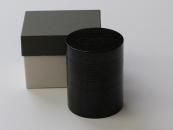 29065 US$135.00 KEYAKI KURO MEHAJIKI (handcrafted container; capacity 60g)
The wood is from the Zelkova tree, known as KEYAKI in Japan. Japanese artisans use KEYAKI for traditional wooden lacquer because the wood is strong and the grain is quite beautiful. KURO means black, and MEHAJIKI is one of the craft techniques used to paint lacquer. The glossy and deep black color evokes a noble and majestic atmosphere...
-
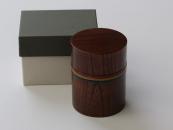 29066 US$135.00 KEYAKI KOMANURI (handcrafted container; capacity 60g)
The stripe design on this tea container is called KOMA NURI in Japanese. KOMA means a toy spinning top, and NURI means painting in Japanese. KOMA is a traditional toy, played with during the New Year holiday celebration in Japan, and is said to be an auspicious item...
-
 New 29103 US$86.00 SEN SORIGATA Chataku (handcrafted saucer: pair)
SEN means castor aralia and SORIGATA means arched shape. SEN has a beautiful annual ring pattern similar to that of zelkova, and is valued as a building and furniture material. Lacquer is applied using a traditional technique called MEHAJIKI NURI so that this beautiful grain remains.
-
 29150 US$33.00 TSUCHIME SUZU KABUSE Tea Scoop (SAMI)
A tea scoop, known as SAMI in Japanese, is a very useful tool for measuring tea leaves from a Chazutsu or other tea container and when placing tea leaves into the Kyusu teapot. This SAMI has a hammered pattern called TSUCHIME, which gives it a luxurious feel. It also brings a traditional Japanese atmosphere to tea time.
-
 29151 US$29.00 TSUCHIME Red Copper Tea Scoop (Sami)
Tea Scoop is very useful for measuring tea leaves from Chazutsu or other tea container and when placing tea leaves into the Kyusu teapot. This SAMI has a hammered pattern called TSUCHIME, which gives it a luxurious feel. It also brings a traditional Japanese atmosphere to tea time...
-
 29152 US$13.50 Tea Scoop HYOTAN (Sami)
Our Tea Scoop is very useful for measuring tea leaves from Chazutsu or other tea container and when placing tea leaves into the Kyusu teapot. HYOTAN, which means calabash (bottle gourd) in Japanese, has been a traditional good luck charm since ancient times in Japan...
-
 29153 US$11.50 Tea Scoop YAMA ZAKURA (Sami)
Our Tea Scoop is very useful for measuring tea leaves from Chazutsu or other tea container and when placing tea leaves into the Kyusu teapot. YAMA ZAKURA means mountain cherry blossom in Japanese. The surface of this Tea Scoop is covered with mountain cherry bark, which is polished to make a smooth texture...
-
 29155 US$10.50 Tea Scoop HAGOITA (Sami)
Our Tea Scoop is very useful for measuring tea leaves from Chazutsu or other tea container and when placing tea leaves into the Kyusu teapot. HAGOITA is a wooden paddle used in HANETSUKI Japanese battledore, a traditional game historically played on auspicious occasions like New Year's holiday in Japan...
-
29301 US$20.00 SS Strainer
Its columnar shape and wide bottom create enough space so the tea leaves can fully expand during brewing to flavor the tea, providing almost the same taste as brewing by Kyusu teapot. It has a handle, which makes it very easy to use. With this strainer, you can brew our genuine green tea three times, which is also the same as with a Kyusu teapot...
-
 29321 US$9.50 Storage Clip for Tea Package (a set of three)
This clip is suitable for closing the tea package for storage of daily use tea leaves. The way to use this clip is to fasten the tea package with it, as shown in the picture. This clip is not only functional but also stylish. Beautiful and delicate designs of traditional Japanese scenes and flowers decorate each clip. You will enjoy three designs...
-
 29341 US$26.00 1-Minute SUNADOKEI (handcrafted sandglass)
This sandglass is a 1-minute tea timer. Pale green color sand tells you when 1 minute has passed. The sand inside was designed to be similar to the color of fine tea. Japanese green tea should be brewed for a specific length of time for ideal flavor. Sencha should brew for 1 minute, and Gyokuro should brew for 1.5 to 2 minutes.
-
 29342 US$27.00 2-Minute SUNADOKEI (handcrafted sandglass)
This sandglass is a 2-minute tea timer. Purple color sand tells you when 2 minutes have passed. In the 7th century in Japan, purple was the color of the highest rank in a system of status. recognized as a color that gives the impression of nobility and elegance. 2 minutes is the best time to brew gyokuro, the highest grade of Japanese green tea. Japanese green tea should be brewed for a specific length of time for ideal flavor. Sencha should brew for 1 minute, and Gyokuro should brew for 1.5 to 2 minutes.
-
 New 29401 US$252.00 CHABAKO (handcrafted container; capacity 300g)
CHABAKO is a cedar wood box that has been used since the late Edo period to store and transport tea leaves while keeping them fresh. The material typically comes from thinned cedar trees over 30 years old. After being exposed to the elements for at least two months and carefully dried underweight, only the most stable wood-resistant to warping and distortion-is selected....


